Tuesday, November 24, 2015

Local author and musician team for novel release event at Buffalo’s Mohawk Place on December 4

Author Michael Farrell
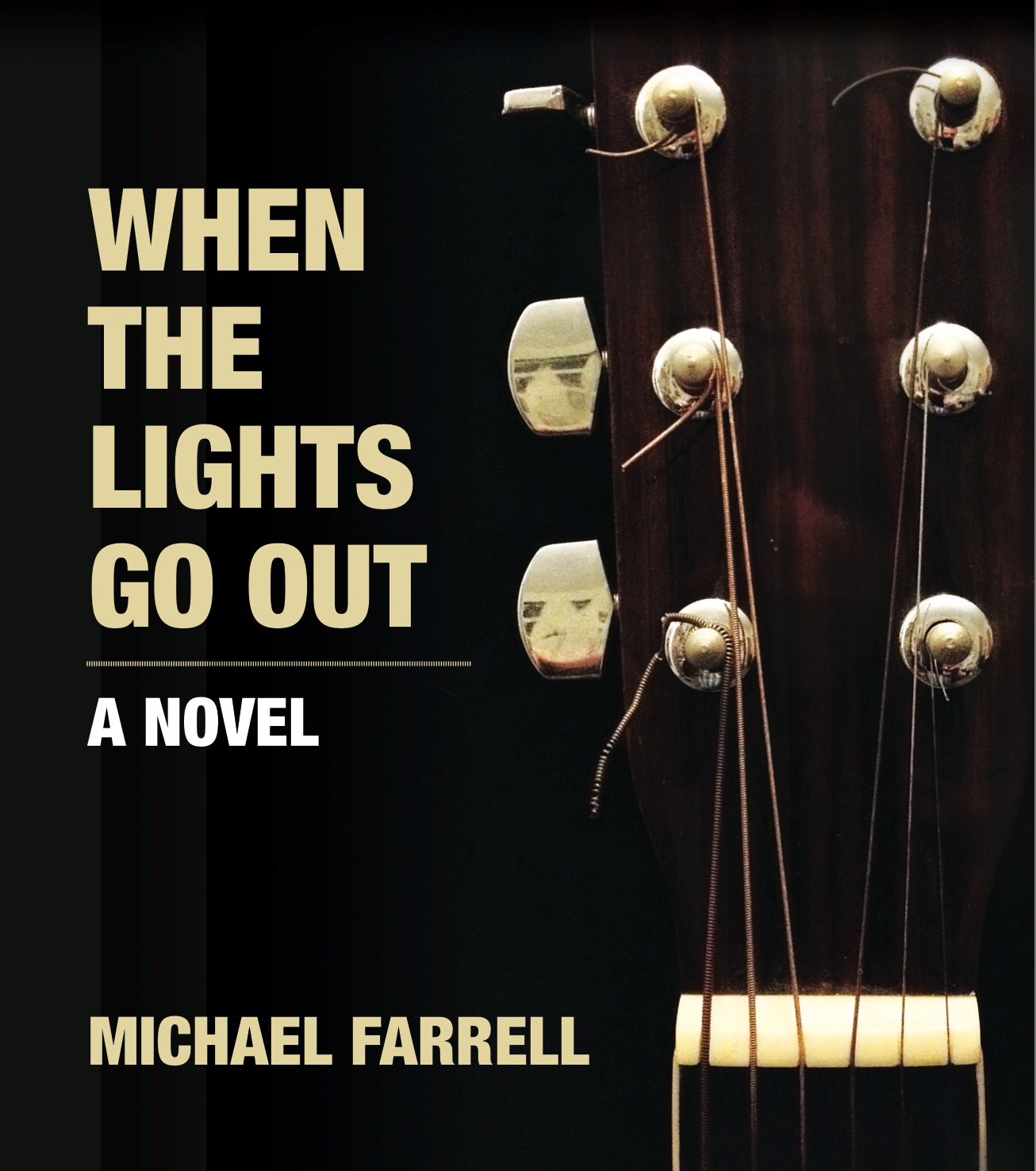
Buffalo author Michael Farrell will join local singer/songwriter Sara Elizabeth for a Happy Hour event to celebrate the recent release of Farrell’s new novel, When the Lights Go Out inside Buffalo’s Mohawk Place (47 E. Mohawk St.) on December 4 from 5 to 8 p.m.

Farrell’s Buffalo-set novel—which tells the story of a barroom guitarist and his journey from rock clubs to familial crisis and rediscovery of music’s revelatory meaning—was officially released by No Frills/Amelia on November 10. But in collaborating with Elizabeth’s performance (from 6 to 8 p.m.), Farrell will sign and sell books inside a reverberating environment which typifies the backdrop of his newest work.

“Many of this novel’s most critical scenes happen in rock clubs just like Mohawk,” said Farrell, whose first novel, Running with Buffalo, was released in 2007. “To have its release event there aside the music of Sara Elizabeth is going to be special.”

Born in Buffalo and raised in Hamburg, Michael Farrell is a graduate of St. Bonaventure University and earned an MFA in Creative Writing from Pine Manor College’s Solstice Program. His work has regularly appeared in numerous publications, including The Buffalo News, Buffalo Spree and The Boston Herald. More about Farrell and his writing can be found on his website at farrellstreet.com.

Singer/songwriter Sara Elizabeth
Sara Elizabeth is a singer/songwriter, musician, storyteller, and multi-instrumentalist based in Western New York. A 2012 graduate of the University at Buffalo's Department of Music, Elizabeth’s musical influences range from The Beatles to Ingrid Michaelson and The Avett Brothers. According to Sara, she takes “the heart of folk music, the soul of the blues, the brain of classical, and the energy of modern indie rock and uses them to tell stories no one has ever heard before.” This is evident in her trio of original releases, including 2014’s "Be Well.”


Books published by No Frills Buffalo can be purchased online at www.amazon.com, www.powells.com, www.barnesandnoble.com, www.ECKO.com and www.nofrillsbuffalo.com. No Frills Buffalo titles can also be found in Western New York bookstores, including Talking Leaves; Dog Ears Bookstore; The Second Reader; Monkey See, Monkey Do; Lift Bridge Books in Brockport; and Buffalo Street Books in Ithaca.

Wednesday, November 4, 2015

Home (Revisited)

(Author's note #1: With my second novel finally finding the light of day over the next week, figured I should re-post the following, which I wrote three years ago for my graduate school's nationally distributed newsletter. It discusses my relationship with Buffalo and the need to write about it, both pertinent as my Queen City-set When the Lights Go Out starts to find its way to the public. Enjoy.)

I saw the streets all ripe with jewels
Balconies and the laundry lines
They tried to make me welcome there
But their streets did not feel like mine
So long, I’m goin’, goin’ home
-Dan Auerbach, “Goin’ Home”

One’s connection to home can be like one’s connection to family. At its best, home is a wonderful thing. It is the one place that feels like yours, the place you’re truly attached to. At its worst, home is a suffocating beast, full of frustration and timeless annoyances. I somehow overlooked the enduring duality of this relationship while living elsewhere. Now back on my hometown streets of Buffalo, New York as a returned resident, I’m surrounded by the daily complications of this association.

Buffalo has been both haven and harrowing for most of my life. It’s the city that hosted my birth, my Christmas mornings and high school basketball games. It gave me friends I’ve kept since preschool, girls I kissed in elementary school. It instilled the competitive grit I’ve used to tough through professional obstacles and rejection. And it infected me with the underdog mentality that western New Yorkers are born with. Every Buffalo kid grows up with a chip on the shoulder, earned from condescending New York City scowls and southern state insults—the ones about snow and rust, urban blight and Super Bowl losses. I’m from a city that no one understands, compliments or respects. This has bred intense loyalty, one that’s ignited arguments with ignorant strangers and Florida waiters. It’s been an inconvenient loyalty, but it’s always been considered necessary. This is my hometown, to defend and support. In good times and bad.

Unfortunately, the whole defend-and-support thing isn’t always reciprocal. Home can agitate, frustrate and torment. It can be like a Springsteen song, but not in a good way. No matter how your beliefs, attitudes and aptitudes have progressed, home drags behind. No matter how many positive memories you’ve generated away from it, home can rekindle the painful moments you’ve forever tried to shake. No matter how many out-of-town successes you’ve experienced, home can preserve your failures for family dinners, Friday night socials and supermarket reunions. Buffalo is where my mother wants me to become a teacher, where my father thinks I should become a salesman. And it will forever be where my high school English teacher said, if he had one piece of advice for me, it was to never pursue a career in English.

But it will also remain the chief source of my artistic inspiration, just as it has for my entire writing life.

I lived in Boston for eleven years; I worked inside Manhattan’s Rockefeller Center for a summer. I once fell asleep in Spain and woke up in France. I’ve been to Ireland twice, Italy, Iceland and Scotland once, and to nearly every major American city for more than a weekend. I’ve never felt compelled to write about those places the way I do about Buffalo. It’s forever been an underutilized backdrop, full of faded glory amid glimmers of progress and waterfront panoramas; it’s loaded with complex characters striving for genuine salvation in the shadows of economic stall. Its story has surrounded my own story, and continues to affect me with its successes and failures. Some days, I smile at nineteenth-century buildings being refurbished by flanneled laborers; other days, I seethe down sidewalks as another Hunt Realty sign finds an empty storefront. Both experiences sear through me in different ways, both eliciting intense feelings usually reserved for personal hardships. But that tightening cringe in my stomach—whether from excitement or resentment—proves I care. It’s undeniable evidence of an intense and, at times, exhausting personal connection. And it’s a multi-faceted emotional connection that’s injected a voice, passion and literary purpose into every Buffalo-set item I’ve ever scribbled.

And maybe that’s why I moved back here last year. Maybe I grew tired of disrespecting this connection, of treating it with distance when it’s actually truly special. Maybe I got sick of not contributing to the place whose avenues, buildings and barflies have given me chapters of narrative inspiration. Or maybe I’ve simply grown weary of writing essays, columns and novels about the only home I’d ever claim, all while keeping it four hundred miles away.

Whatever the reason, one thing is certain: I’m back, living and writing in the Queen City of the Lakes. Our winters are cold, but our summers are gorgeous. Our local economy’s inconsistent, but our neighborhoods are varied and vibrant. All our streets aren’t ripe with jewels, but many of them feel like mine. If you need me, I’ll be here.

This is my home.

(Author's note #2: This entry was posted while listening to "Vagabond Moon" by Willie Nile.)

Friday, October 30, 2015

"When the Lights Go Out" due out on November 10


After six long years of writing, editing, re-writing, screaming, drinking, and thinking, I'm proud to say that my second novel, When the Lights Go Out, is finally ready for release by No Frills/Amelia on November 10. Here's the press release, distributed to the Buffalo media on October 30:

A barroom guitarist strumming between two lives. A faded bluesman drunk on his own legend. A rock pianist who responds to a higher calling. These compelling characters clash to drive the drama of author Michael Farrell’s second Buffalo-set novel, “When the Lights Go Out,” set for release by No Frills Buffalo on Nov. 10.

Farrell — whose debut novel “Running with Buffalo” was released in 2007 — returns to introduce readers to local musician Johnny “Nighthawk” Nolan, a downtown Buffalo favorite who spent his evenings exhaling covers and originals, all while basking in the adulation of devoted revelers. To Nolan, those nights under the lights meant everything — until he needed to walk away.

But what happens to a musician when his life strays from the stage? Does he settle into his marriage to a barroom waitress? Does he try to smooth past friction with the city’s most prominent bluesman? Or does he lean on the scene’s only garage band-leading Catholic priest to find his voice with or without the microphone? Throughout his journey from rock clubs to familial crisis and rediscovery of music’s revelatory meaning, Nolan will find out how life unfolds — when the lights go out.  

Born in Buffalo and raised in Hamburg, Farrell is a graduate of St. Bonaventure University and earned an MFA in Creative Writing from Pine Manor College’s Solstice Program. His work has regularly appeared in numerous publications, including The Buffalo News, Buffalo Spree and The Boston Herald. More about Farrell and his writing can be found on his website at farrellstreet.com.

Books published by No Frills Buffalo can be purchased online at www.amazon.com, www.powells.com, www.barnesandnoble.com, www.ECKO.com and www.nofrillsbuffalo.com. No Frills Buffalo titles can also be found in Western New York bookstores, including Talking Leaves; Dog Ears Bookstore; The Second Reader; Monkey See, Monkey Do; Lift Bridge Books in Brockport; and Buffalo Street Books in Ithaca.

Wednesday, May 13, 2015

Spending time off Farrell Street--and still alive

Note: To the four or five ADD-addled surfers who either check or happen upon this blog from time to time, you’ve probably noticed I haven’t been posting a whole lot of work lately (aside from last year's The Mark of St. Mary).

Have I stopped writing? No; quite the opposite. I’ve thankfully been freelancing for a variety of Buffalo publications over the past three years, which has cut into my introspective blog time. I also put out a new, semi-refined copy of my first novel (Running with Buffalo) with No Frills/Amelia Press, and have spent any other writing time working on the 94th edit of my second novel, When the Lights Go Out (now available). This offering is getting closer and closer to seeing the light of day, so stay tuned for details.  

So, translation? I’ve been busy. The good news is that, if you are interested in finding anything with my byline—and you refuse to pick up paper copies of either The Buffalo News, Buffalo Spree or WNY Craft Beer Magazine—there are plenty of links on the Interwebs to explore.

And if you need to get hold of me? Email farrellstreet@gmail.com.

I’ll be back to regularly posting on this site sooner than later. Until then, scroll (and click) below to see what I’ve been doing with myself, look for more of my work on a browser near you, and stay tuned for more.  

Buffalo News reviews

Bars

Gusto's Farrell Four
Ian McFeron, Spirit of the West
The Observers, Glass Tiger
Black Star Riders, Driftwood
Texas in July, Willie May
Funktional Flow, Jony James Band
A Band Named Sue, Sauce Boss
Crikwater, World's Fair
Ozric Tentacles, Primus
The Royal Halls, Chuck Mead
Bobo, Survivor
The Tins, Turnpike Troubadours
Mac DeMarco, AJ Woods
Matthew Good, The Traditional
Time Giant, Michael King Project
Our Lady Peace, The Spin Wires
Bad Suns, Kurt and The Loders
Suzanne Vega, Buffalo Killers
Daydream Chronicles, Blue Ribbon Bastards
Arkells, MXPX
Conehead Buddha, Tugboat
Laura Stevenson, Aqueous
Pianos Become the Teeth, Applennium
Sloan, Imperial Brown
St. Patrick's Day weekend
English Beat, Sheila Divine
Tough Old Bird, Jim Lauderdale
The Naturalists, Whiskey Charmers
The Early November, Sugar Blue
Will Hoge, Head North
Imperial Brown, Pattern is Movement
Johnny Revolting, Frances Black

Travel
A winter taste of Iceland’s lager liberty
The sound of Scotland

Misc.
A rockin' New Year's Eve
Buffalo's newest bar district
Keeping the Irish in Buffalo's St. Patrick's Day
Queen City crusaders
2015 summer playlist
Buffalo's summer shows--by the decade
Alternative Buffalo parties for two
Beers with the Bills: Buffalo's best football bars
Reaching across New York State for five fall beers
Buffalo's holiday traditions
Davey O. and friends sing for the Food Bank
Kerfuffle boasts stellar lineup for Christmas show
A South Buffalo pub crawl
BN Interview: David Gray
BN Interview: Jess Collins of Orations
BN Interview: Max Kerman of Arkells
BN Interview: Zak Ward of Son of the Sun
BN Interview: Tyler Westcott of Folkfaces
BN Interview: Tough Old Bird
BN Interview: Sara Elizabeth
BN Interview: Casey Mullaney of Tugboat
BN Interview: Chris Malachowski of Wolf Tickets
BN Interview: Tommy Z
BN Interview: Sharon Mok of Tiny Rhymes
BN Interview: Neko Case
BN Interview: The Sadies
BN Interview: The Spin Wires
BN Interview: Crikwater
BN Interview: The Steam Donkeys
BN Interview: Ron Hawkins
BN Interview: Sam Roberts
The case for: Oinktoberfest
The case for: the Buffalo Irish Festival
Coffee and concerts at Daily Planet
Celebrate fall beers (national)
Celebrate fall beers (Buffalo)

Buffalo Spree features


Buffalo Business First reviews/features


Block Club: Issue 33


(Author's note: This post and list were updated while listening to "Like A River" by My Morning Jacket.) 

Friday, January 17, 2014

The Mark of St. Mary

Elementary school leaves a mark on all of us.

Whether public or private, both handled us at our most formative, when everything crackling around us could influence our foundation and plant the seeds for who we’d become. Within their walls, we garnered maximum attention while finding out what we liked, what we didn’t like, and what we were good at. These types of revelations put our lives in motion.

But when I say that my elementary school left a mark on me, I don’t mean it in only the aforementioned figurative sense. I mean it literally, like in an “I have two jagged marks on my head from accidents that occurred within my elementary school” way. I fell from hanging off a stairwell for one, and sustained another by diving through a fire exit to save a loose basketball in a tournament game. Both intelligent decisions earned scars that have endured for decades—much like the rest of my memories inside Hamburg, New York’s St. Mary of the Lake.

That’s why this past Wednesday was so hard. When the Catholic Diocese of Buffalo elects to close the place that raised you, the place that filled nearly every pre-teen year of your life with the substance you retell and recall for the rest of your life, it hurts. It cuts. It digs in, jerks and leaves a painful mark.

I attended St. Mary from 1982 to 1992, preschool through eighth grade. I walked to school until I was nine years old, took a bus when my family moved a whole four blocks further away. I arrived every school day in a white shirt, navy blue tie and matching blue slacks. In my early years, I teamed the uniform with Michael Jackson-esque black loafers and whatever utilitarian coat my parents laid out for me. In my later years, I went to school in bluchers and a white Boston Celtics Starter jacket, earned via an afterschool trade. In both instances, eventual choices were foretold: I’d gravitate toward a professional existence that didn’t require me to wear a tie or loafers, and I’d eventually move to Boston and follow the Celtics in person.

But St. Mary was more than a soothsayer for eventual professions or pro sports allegiances. It was more than your popular Catholic school imagery, one full of scared children adhering to the rules of priests, nuns and upstart teachers, all while donning matching shirts and blouses under classroom crucifixes. It was a place where hardware store washers acted as milk tokens, where red and blue poker chips acted as school-issued currency for pizza (red) and hamburgers (blue). It hosted my first right-cross, my first girlfriend and my first Bobby Brown-serenaded slow dance—one in which a nun approached too-close partners and asked that they “leave room for the Holy Spirit.” It was the backdrop for massive Niagara Candy sales, Campbell Soup label computer sales and “butt-surfing” hallway races, ones that would end with three boys in blues sliding ass-first over a marble finish line while teachers’ classroom doors were closed.
 
Most of all, it was place for people, influential ones who’d form the foundation of my existence.          

Small classes hosted students I befriended at four years old and, somehow, still remain connected to. Over the last 20 years, I’ve seen them at bars, grocery stores and Bills games. We’ve vacationed together, moved away from Buffalo together and shared in professional success together. And, when I married in 2010, three kindergarten classmates were in my wedding party. No matter the time or distance apart, there’s an unmistakable bond that bands not only my close St. Mary friends, but anyone who walked those halls together. Anyone who was forced to read Johnny Tremain in the sixth grade or slice a frog open in the seventh grade. Anyone who was told by our school librarian to be quiet because “the books are sleeping.” It all happened within the confines of that Catholic school, and it had a lasting effect on all of us.    

When these moments were seeping into our days, we were flanked by teachers who lorded over a captive audience of children in need of challenges. I had teachers I was afraid of at St. Mary—physically. Some packed glares and statures that made me petrified to blow off homework. Others had voices so frightening they’d follow me home and haunt my dreams. But, on the other side of this fear was a fear of not performing, of not knuckling down and executing. I saw these teachers within the same classroom, all day, every day. They wanted me to succeed, and I didn’t want to disappoint them. This healthy fear of failure instilled a discipline in me, just as it did with others who were frightened of—or hell-bent on pleasing—these teachers. Today, this work ethic fuels everything I do, just as it does with other St. Mary alums working as teachers, activists, lawyers, doctors, advertising salesmen and financial advisors.

As complicated events crept into our developing lives, the school preached faith, support and the power of prayer to help deal with unexplainable, unfortunate or unmanageable events. In 1986, I sat in a St. Mary classroom and watched the Challenger unexpectedly explode on live television. A few years later, I walked through the school’s front doors to find out our hallways and classrooms had been vandalized by local teenagers, forcing temporary closure. And, when a fellow student’s mother, father or grandparent unexpectedly passed away, I joined the rest of the school in processing across our parking lot to pray for families at morning Mass. It was support through faith and unity, two things that’ve proved rare as I’ve aged through more complicated problems. But in those St. Mary halls, they weren’t at a premium. They were the norm.           

Outside of our classes and emotional maturation, we were guided through track meets, baseball games and basketball tournaments. For some, these are the most vivid St. Mary memories. Stacks of multicolored ribbons from the standing long jump or 50-yard dash. Late-summer batting practices at Hamburg Little League. Winter basketball practices inside that drafty gymnasium, where a burst of arctic Lake Erie air would whip through the joint every time someone cranked open its heavy steel-encased door.

Basketball was my first love, and I found it at St. Mary. As I sit here typing this, I can recall every inch of the gym as it looked in 1992. I can picture the lanes, the backboards and sliding wooden doors that separated the court from the school cafeteria. I remember where the storage room was and, if you needed to find a basketball, how the weekend janitor used to stash a loose one behind racks of bingo chairs. That gym was a second home to me, just like it was for countless other Lakers. It gave us somewhere to go, somewhere to grow. Now adults, many of us think of that room when we remember our childhood, what was good about it, and how we’d like our own children to experience such a connection with such a place.

And maybe that’s why St. Mary’s upcoming closure has affected long-departed alums like me. Its shuttering not only alters definitive chapters of my life, but is yet another reminder that my childhood will never be replicated by my eventual children.          

They’ll never have the chance to grow within the same familial, nurturing environment as I did. They’ll never walk the same sallow halls, play defense on the same court or find themselves unexplainably attached to a school and its namesake. This is sad, and as more and more of these Catholic institutions fall to consolidation or outright closure, these types of blogged goodbyes will become a rite of passage for legions of devastated students and nostalgic adults. If these testimonials continue to come flowing forward in hail of intricate details and superlatives, maybe the people making these decisions might think more considerably about what they’re taking away from a community. They’re not only taking away a building or classrooms or teachers. They’re eradicating a way of life that’s formed generations.

This is the influence of St. Mary of the Lake. It’s left an indelible impact on all of us who were lucky enough to call it home and, when its doors close, that bond will remain. That’s the mark of St. Mary. 

Wear it with pride—and let it endure for decades.
Monday, October 7, 2013

No Frills to release “Running with Buffalo” by Michael Farrell

(Note: This is the press release sent out by publisher No Frills Buffalo last week. Follow the noted links with any questions or concerns.)  


The thrill of post-college possibilities. The loyalty of childhood friendship. The pain of necessary transitions, and unexpected answers that could ease a life of uncertainty. These are some of the elements explored in Michael Farrell’s first novel, Running with Buffalo, set for release by No Frills Buffalo.
 
The Buffalo-set story’s narrative is delivered by Joseph Cahan, a 2001 college graduate who wants to thrive aside his Irish family and life-long friends who live for football, stout and Fender solos. Full of expectations and idealism fueled by rock music lyrics, Joseph’s goal in life is to become a writer who documents the hilarious and exciting adventures of his post-college life. But, in the months that follow his graduation, dooming complacency, lack of professional opportunity and lingering love alter his path. Delivered as a humorous and heartfelt testimonial about life's fearsome complexities, unanticipated changes, and the simple truths that could quell the intensity of it all, Running with Buffalo is about the uneven search to find a place to call home—and the simple answers that could sooth the journey.
 
Born in Buffalo and raised in Hamburg, author Michael Farrell graduated from Frontier High School and St. Bonaventure University before earning an MFA in Creative Writing from Massachusetts-located Pine Manor College’s Solstice Program in 2010. His work has appeared in the Buffalo News, Buffalo Spree Magazine, Buffalo Rising, Business First, Block Club Magazine and the Boston Herald, where he worked as a reporter from 2004 to 2011. He now serves as an adjunct English and communication arts professor at SUNY Erie Community College in Buffalo, and can be found on his website at www.farrellstreet.com.
 
Books published by No Frills Buffalo can be purchased online at www.amazon.com, www.powells.com, www.barnesandnoble.com, www.ECKO.com and www.nofrillsbuffalo.com. No Frills Buffalo titles can also be found in Western New York bookstores, including Talking Leaves; Dog Ears Bookstore; The Second Reader; Monkey See, Monkey Do; Lift Bridge Books in Brockport; and Buffalo Street Books in Ithaca.
 
No Frills Buffalo is currently accepting submissions from writers interested in being published. For more information, please visit www.nofrillsbuffalo.com or email submissions@nofrillsbuffalo.com. You can also follow No Frills Buffalo on Facebook at www.facebook.com/NoFrillsBuffalo?ref=ts&fref=ts for frequent updates.

Thursday, April 25, 2013

From Forrest to Fundraiser: The Endorsed Evolution of Tom Hanks Day

Ten years ago, Michigan native Kevin Turk was not an international fundraiser.

He was just your everyday Western Michigan University student, one with a great group of friends, a comfortable couch, and some free time between classes. Then, on an April Fools’ Day that called for rum and a cinematic run through reconstructed history, Turk’s semi-charmed life got a little more interesting.

"My friend looks at me and says, 'Dude, do you want to watch some Tom Hanks movies and drink?' And I thought that sounded like a good time, so we started drinking rum and Dr. Pepper, and we popped in Forrest Gump."


The many faces of Tom Hanks.
Thus began the first official Tom Hanks Day, an event that’s graduated from its bender beginnings and has morphed into a hybrid celebration of the one-time bosom buddy—and fundraiser for Hanks's chosen charity, Lifeline Energy. One look inside the event’s 10th installment—hosted on April 13th by adjoined Chicago bars Headquarters Beercade and Uncle Fatty’s Rum Resort—would reveal the enamorment of a few frighteningly devoted, albeit altruistic, Hanks fanatics. But, according to Turk, that’s not exactly the case.  

"I can't say we picked Hanks because we knew what an awesome guy he'd turn out to be. And none of us are die-hard fans of his,” said Turk, a Chicago resident who works on an experiential marketing team for Groupon. “We just loved Forrest Gump and a bunch of his other movies."

Turns out they’re not the only ones. On a sunny spring afternoon in Chicago, hundreds of fans of such cinematic classics as Splash, Apollo 13 and Bachelor Party checked in for an afternoon of Hanks-related revelry. Cast Away-themed t-shirts were sold at the door; green Tom Hanks Day cozies accommodated the event’s Goose Island canned beer special. Attendees posed for photos behind masks of Hanks characters, and friends gathered under flat-screen projections of the shirtless Hollywood icon and a slobbering Dogue de Bordeaux in Turner & Hooch. There was even a group dressed as players from A League of Their Own, complete with a drunken Jimmy Dugan. The influence of Hanks’s career was omnipresent—even inside Uncle Fattey’s bathroom. When a patron walked in and knocked on a stall door, the voice from inside replied with a Forrest Gump quote.

“Seat’s taken.”


Hanks fans pay tribute to A League of Their Own.
Ridiculous? Sure. Fanatical? Maybe. Awesome? Absolutely. Hundreds of people gathering under the flag of Tom Hanks, arguably the most universally loved and respected actor of his generation. Hundreds of young adults hoisting cocktails under the neighborhood disputes of Ray Peterson (The ‘Burbs) and growing pains of Josh Baskin (Big). Hundreds of fans who’d even adjusted the popular “Ole’” soccer chant to accommodate the actor’s name. (Tom—Hanks, Tom-Hanks-Tom-Hanks-Tom-Hanks! Tom—Hanks, To-om—Hanks!) Even in the early years, Turk and his college friends knew they'd created a truly original event—and thought Hanks should know about it.

"My friend and I started emailing someone we thought was Tom Hanks's brother,” said Turk of mails sent in 2006, after the event had moved from WMU to Chicago. “Then, I get an email from someone claiming to be Tom's assistant. She said Tom had heard of the event and wanted to donate merchandise for the day. I'm pretty cynical, so at first I didn't believe the mail.  I even sent a response mail that read, 'If this is one of my friends, stop f---ing with me. But, if this is legit, please call me."    

Minutes later, he received a call from Hanks's assistant—who was not f---ing with him.

"She told me that Tom loved the idea and wanted to send us a bunch of stuff for the event. So I said, great, tell him to send whatever he wants."

So he did. First, Hanks sent Turk and friends a typewritten letter. Then, he sent signed movie posters and DVDs. He sent one of the Wilson volleyballs from Cast Away and props from That Thing You Do. He even sent signed replications of jerseys pressed for his 50th birthday baseball stadium road trip, a traveling bash that involved such celebrants as Billy Crystal. One year, he even sent a 20-pound slab of homemade bologna, shipped in a giant cooler with its recipe. Turk was overwhelmed. Though he and his friends ate the bologna (which was delicious), they decided to repay the rest of Hanks’s ridiculous generosity by turning their Joe Versus the Volcano-inspired Kalamazoo kegger into a legitimate charity event.

"As soon as his assistant reached out, I just realized that Hanks is super awesome,” he said. “He was going to send us all this stuff, so we decided to turn this event into a fundraiser and raise money for whatever charity Tom wanted us to support."

This charity turned out to be Lifeline Energy, an education-driven initiative focused on sub-Saharan Africa that boasts Hanks as its international ambassador. With this redirected focus, Turk began to generate revenue from the day’s t-shirt and beer sales, as well as a raffle conducted with Hanks’s generous donations. These proceeds are now directed annually to Lifeline, with donations totaling into the tens of thousands of dollars since 2008. Exposure for the event through Jimmy Kimmel Live, CNN and Time Magazine has also drawn direct donations to the charity through online or independent contributions. Also, in a few instances, Hanks has personally matched the amount raised through his day’s Goose Island-sponsored celebration. Such collaboration from the actor has not only impressed the event’s originators, but inspired them to keep the party going year after year.

Tom Hanks superfan, ready to party.
"The reason this is still going strong is because Hanks is such a genuine guy,” said Turk. “He cares about people and gives back. He's not an egotistical person at all, and we try to replicate that with these events. Those (good intentions) are why this event continues."


And, it’s started to branch out. Along with stateside appearances in Cleveland and Portland, Tom Hanks Day has now become International Tom Hanks Day, with annual observation in Toronto, Ontario. This year also saw the day’s first acknowledgement in Taiwan—on a boat, and with official event t-shirts for about 75 people, according to Turk. Still, what once operated under serendipitous western  Michigan weather (sunny days that Turk and friends would refer to as a “Tom Hanks miracle”) has now found its long-term home in Chicago, with official acknowledgement and revelers like Dawn Wilson, a 27-year-old stage manager of Saturday Night Live feeder troupe, Second City.

"When I first started coming to this, I assumed it was some festival of drunkeness. But, when I realized it was all to support some awesome cause, I thought, yeah, I can support that," said Wilson, who’s attended two Tom Hanks Day events. "This is an event to cater to my age demographic. There's beer and a party, but there's also an underlying cause. That's why people are here."

And that’s why Turk hopes people keep coming. What started as a couple of dudes hoovering spiked DP while Jenny and Forrest danced to Skynard has matured into a legitimate opportunity to boost those in need of financial aid and education. It’s a ridiculous transition, but one that’s now rolled forth for a decade. Back when they were still hosting Tom Hanks Day on April Fools’ Day, Turk responded to Hanks’s aforementioned Smith Corona communication with the following message:

With your help, April 1st will no longer be known for tomfoolery, but rather Tom Hanks.

And for The Money Pit. And Saving Private Ryan. And, for the most creative, Captain Morgan-influenced charity idea ever endorsed by a two-time Oscar winner.   

(Author's note: This entry was finished while listening to “Signed, Sealed, Delivered I’m Yours” by Stevie Wonder, featured in the Tom Hanks classic You’ve Got Mail.)

(Final note: If you'd like to aid the efforts of Lifeline Energy, please visit their website for donation information and instruction.)